

Does Netanyahu Really Support the Two-State Solution?
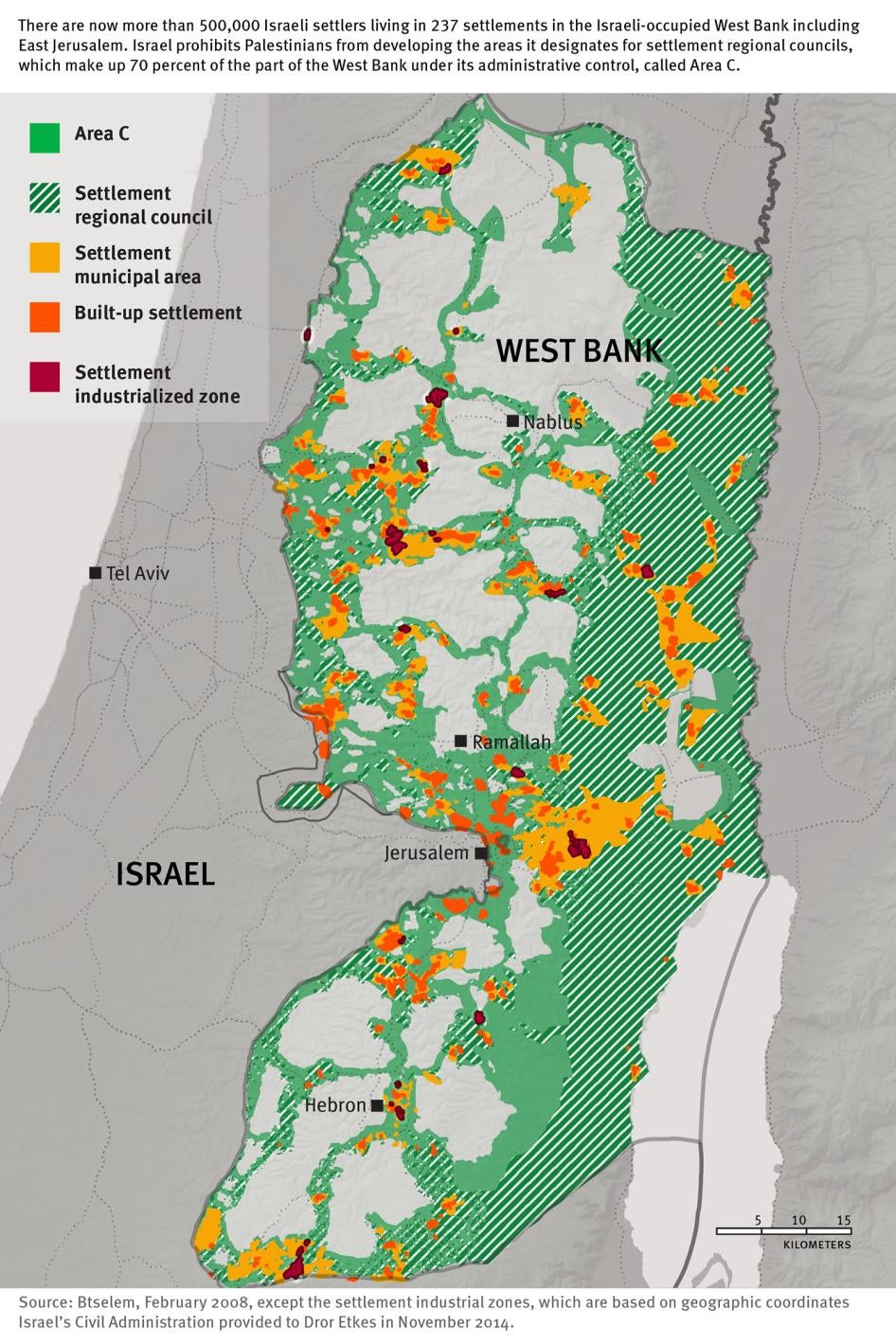
Reality is that there are today 634,000 Israeli citizens living in the Shomron and Judea and 356,000 living in Jerusalem over what was the Green Line . These numbers increase by on average 5.76% annually.
Opposition to the Oslo Accords & the Gaza "Disengagement"
In the 1990s, while leader of the Likud party in opposition, Benjamin Netanyahu was one of the most prominent critics of the series of agreements between Israel and the Palestine Liberation Organization (PLO) that became known as the Oslo Accords, which began under the Labor party government of Prime Minister Yitzhak Rabin. Following Rabin’s assassination in 1995 by a right-wing Jewish extremist, some Israelis, including members of Rabin’s family, even blamed Netanyahu for being complicit in Rabin’s murder by fanning the flames of incitement against him. In particular, his critics point to rallies that Netanyahu addressed at which Rabin was portrayed on signs in a Nazi uniform and accused of being a traitor.
Taking power in 1996 for his first term (1996-1999) shortly after Rabin’s death, Prime Minister Netanyahu proceeded to drag out the negotiations begun by the previous government while delaying or refusing to implement provisions of already-signed agreements, including redeployments of Israeli troops, antagonizing Palestinian negotiators as well as US President Bill Clinton. Following his first meeting with Netanyahu, in 1996, a frustrated Clinton exclaimed angrily to his aides: “Who the f--k does he think he is? Who's the f---ing superpower here?"
While drawing out talks with Palestinian negotiators, Netanyahu increased settlement construction, following the advice of his Likud predecessor, Yitzhak Shamir, who said after losing power in 1992 that if he had remained prime minister: “I would have conducted negotiations on autonomy for 10 years and in the meantime we would have reached half a million [settlers in the occupied West Bank].”
In 2001, back in the opposition, Netanyahu was caught on video bragging to a group of Jewish settlers that he had undermined the Oslo process while prime minister, stating: "I de facto put an end to the Oslo Accords.” Regarding pressure from the US, Netanyahu said: "America is a thing you can move very easily." In the video he also told the settlers that the way to deal with Palestinians is to "beat them up, not once but repeatedly, beat them up so it hurts so badly, until it's unbearable."
In 2005, then-Finance Minister Netanyahu resigned from his post in Prime Minister Ariel Sharon’s Likud government in protest of Sharon’s plan to withdraw settlers and soldiers from Gaza and four small Jewish settlements in the West Bank. Remaining on the fence until the last minute, Netanyahu resigned despite the fact that Sharon assured his right-wing critics that the withdrawal from Gaza would actually help prevent the creation of a Palestinian state rather than hasten it, by alleviating international pressure and allowing Israel to continue settlement expansion in the West Bank and East Jerusalem. As top Sharon advisor Dov Weisglass put it in 2004, the Gaza withdrawal supplied the “formaldehyde that is necessary so there will not be a political process with the Palestinians… until the Palestinians turn into Finns.”
The Bar-Ilan University Speech & Netanyahu's Vision of a Palestinian "State"
Returning to power in March 2009 for a second term as prime minister (2009-2013), Netanyahu once again came under pressure from a US president, recently elected Barack Obama, and the international community, to enter into serious negotiations with the Palestinians based on the two-state solution.
In June 2009, Netanyahu gave a speech at Israel’s Bar-Ilan University where he said for the first time that he supported the creation of a Palestinian state, in a move heralded by his supporters as a bold and historic moment. However, he attached numerous conditions that effectively stripped the proposed state of any real sovereignty, and others that no Palestinian leader could accept even if they wanted to. These conditions included:
The state would be demilitarized and its borders and airspace would be controlled by Israel.
Occupied East Jerusalem would remain under Israeli control.
Palestinians would have to recognize Israel as the “state of the Jewish people,” thereby formally endorsing the institutionalized discrimination that Palestinian citizens of Israel (who make up about 20% of the population) face living in a state that privileges Jews over non-Jews.
Palestinian refugees expelled during Israel’s creation and their descendants (also refugees) would not be allowed to exercise their internationally recognized legal right to return to the land they were forced to leave when Israel was established in 1948-9
In his speech to a joint session of the US Congress in May 2011, Netanyahu reiterated and elaborated on his vision of a Palestinian “state,” saying:
He would refuse to base negotiations on Israel’s internationally recognized, pre-1967 borders, the foundation of previous talks and international efforts to make peace going back decades.
Israel would retain large so-called settlement “blocs” in and around East Jerusalem, which jut into the West Bank (the heartland of the proposed Palestinian state), effectively cutting it in two.
Israel would maintain “a long-term military presence” in the Jordan Valley, meaning Israel would control all entry in and out of the Palestinian “state” along with some of its most fertile agricultural land.
In late December 2012, Likud Knesset member (MK) Tzipi Hotovely told a panel discussion that the Bar-Ilan address was merely a "tactical speech for the rest of the world," declaring: "We are opposed to a Palestinian state."
In July 2014, Netanyahu declared that he would never relinquish control of the Jordan Valley, the heartland of the West Bank portion of an envisaged Palestinian state, saying:
I think the Israeli people understand now what I always say: that there cannot be a situation, under any agreement, in which we relinquish security control of the territory west of the River Jordan.
In March 2015, while campaigning for reelection, Netanyahu declared that his Bar-Ilan University speech was no longer relevant and that he would never allow the creation of a Palestinian state as long as he was prime minister. Although he tried to walk back his statement rejecting a Palestinian state after winning reelection, a senior Israeli official subsequently went even further, telling a journalist that the creation of a Palestinian state “won’t even happen in our generation.”
Creating "Facts on the Ground"
During both his first (1996-1999) and second (2009-2013) terms in office, Netanyahu accelerated the building of Jewish settlements on occupied Palestinian land, part of an effort to create “facts on the ground” designed to prevent the creation of a contiguous and genuinely independent Palestinian state in the occupied West Bank and East Jerusalem.
In 1997, a year after taking power in his first term, Netanyahu gave the final go-ahead for construction of a new settlement between occupied East Jerusalem and Bethlehem in the occupied West Bank. Har Homa, which forms part of a ring of Jewish settlements around East Jerusalem, cutting it off from the rest of the West Bank, also forms part of a ring of more than 20 settlements on Palestinian land around Bethlehem, constricting that city’s growth. Attempting to minimize the diplomatic damage done by the announcement, Netanyahu claimed that Har Homa was insignificant and construction probably wouldn’t begin for years. Today, approximately 15,000 Jewish settlers live in Har Homa. In March 2015, while campaigning for reelection, Netanyahu admitted that Har Homa was located strategically in order restrict the growth of Bethlehem and its Palestinian population and to isolate it from nearby East Jerusalem.
From the time that Netanyahu returned to power for a second term in March 2009 until July 2012, the number of Jewish settlers living illegally on occupied Palestinian land in the West Bank grew by 18% according to the Israeli Interior Ministry. In November 2012, following a string of new settlement expansion announcements, including in the highly sensitive “E-1” corridor of East Jerusalem, the US State Department issued an unusually strong rebuke of Israeli settlement policies, with a spokesperson describing them as a "pattern of provocation."
On January 16, 2013, Israel's Peace Now, which monitors settlement growth, released a report condemning Netanyahu's settlement policies, alleging they "disclose a clear intention to use settlements to systematically undermine and render impossible a realistic, viable two-state solution to the Israeli-Palestinian conflict."
Likud & Coalition Partner Opposition to Palestinian Statehood (During Netanyahu's Third Term)
Likud
Inspired by the Revisionist Zionism of Zeev Jabotinsky, who advocated the creation of a Greater Israel that included all of historic Palestine as well as Jordan, Netanyahu’s Likud party has historically opposed Palestinian statehood in the occupied territories and is strongly supportive of Israel’s settlement enterprise. In previous years, Likud's platform explicitly prohibited the creation of a Palestinian state “west of the Jordan River.” During the most recent election, the combined Likud-Yisrael Beiteinu party electoral list released no platform, with some observers speculating that it was because neither party supports the two-state solution but didn’t want the diplomatic headaches that would be created if they declared it in their electoral platform.
Despite Netanyahu’s supposed acceptance of Palestinian statehood as detailed in his Bar-Ilan speech, his party and its rank and file members have never accepted the idea of an independent Palestinian state in the occupied territories. Key Likud members named to Netanyahu’s new cabinet who oppose Palestinian statehood include Defense Minister Moshe Ya’alon, Deputy Defense Minister Danny Danon, and Deputy Foreign Minister Zeev Elkin. During the previous government Ya’alon criticized his predecessor, Ehud Barak, for not approving settlement construction quickly enough, while Danon and Elkin, a settler considered one of the most right-wing members of Israel’s previous parliament, want to annex "Area C" of the occupied Palestinian West Bank (about 60% of the total area) which, according to the terms of the interim Oslo Accords falls under full Israeli security control.
Yisrael Beiteinu & HaBayit HaYehud
In October 2012, Netanyahu allied Likud with former Foreign Minister Avigdor Lieberman’s ultranationalist Yisrael Beiteinu (Israel Our Home) party to run on a joint parliamentary ticket in the upcoming election. Yisrael Beiteinu and Lieberman were important players in Netanyahu’s previous government and will be again for his third term. Lieberman, a settler, has a long history of opposing peace negotiations and agreements signed with the Palestinians, and has said on numerous occasions that peace isn’t possible for at least a generation.
Naftali Bennett’s ultra right-wing, pro-settler HaBayit HaYehudi (Jewish Home) party is another key member of Netanyahu’s new government. While not a settler himself, Bennett is a former head of the main political body that represents Jewish settlers living in the occupied Palestinian territories and also supports annexing the 60% of the Palestinian West Bank known as Area C. In January 2013, Bennett told an interviewer: "I will do everything in my power, forever, to fight against a Palestinian state being founded in the Land of Israel." As part of the coalition agreement signed between the governing parties, HaBayit HaYehudi added a provision requiring the government hold a national referendum on any peace agreement that involved returning occupied Palestinian land. (
What Others Think of Netanyahu
In January 2013, columnist Jeffrey Goldberg of Bloomberg news reported that US President Barack Obama was fed up with Netanyahu and his partners in the previous coalition government, and that he believed "Israel doesn't know what its own best interests are."
In October 2012, former US President Jimmy Carter, who brokered the Camp David peace treaty between Israel and Egypt, accused Netanyahu of having “abandoned” the two-state solution by refusing to halt settlement construction.
In April 2012, Yuval Diskin, the former head of Israel's internal security agency, the Shin Bet, blamed Netanyahu for the impasse in the peace talks with the Palestinians, stating:
Forget the stories they tell you about how [PLO Chairman Mahmoud] Abbas is not interested in negotiation… We are not talking to the Palestinians because this government has no interest in negotiations. “I was there up to a year ago and I know from up-close what is happening. This government is not interested in solving anything with the Palestinians, and I say this [with] certainty.
In May 2012, a leaked report revealed that officials in the British Foreign Office also blamed Netanyahu for the lack of negotiations. The report stated: "Netanyahu has a history of using the incitement issue as a delaying tactic in peace talks." Regarding Israeli claims the Palestinian Authority (PA) school system incites hatred and violence, the Foreign Office report added: "Authoritative studies agree that PA textbooks are not inciting hatred of Israel."
In November 2011, former French President Nicholas Sarkozy was caught on a microphone complaining to President Obama that Netanyahu was a "liar," stating: "I cannot stand him. He's a liar." Seeming to agree, Obama replied, "You're fed up with him? I have to deal with him every day."
In September 2011, former US President Bill Clinton blamed Netanyahu for the failure of peace talks, adding, "The real cynics believe that the Netanyahu government's continued call for negotiations over borders and such means that he's just not going to give up the West Bank."
I
n February 2011, a senior German official told Haaretz newspaper that Chancellor Angela Merkel, a strong supporter of Israel, had expressed her frustration with Netanyahu during a phone conversation, complaining, "You haven't made a single step to advance peace."
In March 2010, Secretary of State Hillary Clinton harshly criticized Netanyahu in a phone call after the Israeli government announced the construction of 1600 new settlement units in occupied East Jerusalem during a visit by Vice President Joe Biden. According to a State Department spokesman, during an angry 45-minute conversation Clinton told Netanyahu that the announcement sent a “deeply negative signal about Israel's approach to the bilateral relationship and [was] counter to the spirit of the vice president's trip… this action had undermined trust and confidence in the peace process and in America's interests." The same day, Clinton told CNN: "The announcement of the settlements on the very day that the vice president was there was insulting.”
Influences on Netanyahu's Views Towards the Palestinians
Netanyahu’s views on the Palestinians were heavily influenced by Zeev Jabotinsky, the founder of the Revisionist Zionism movement and ideological father of Netanyahu’s Likud party. Jabotinsky, who died in 1940, advocated the creation of a “Greater Israel” that encompassed not only what is today Israel, but the occupied Palestinian territories and neighboring Jordan.
Netanyahu was also deeply influenced by his father, Benzion, with whom he was close until the latter’s death in April 2012. The elder Netanyahu (who was born Benzion Mileikowsky before emigrating to Palestine from Warsaw, Poland, in 1920 and changing his name to Netanyahu) worked for a time as a secretary to Jabotinsky in the late 1930s and held uncompromisingly harsh, racist opinions of Arabs. In a lengthy 2009 interview in which he described in detail his views towards Palestinians and other Arabs, Benzion Netanyahu told the Israeli newspaper Maariv:
The Bible finds no worse image than that of the man from the desert. And why? Because he has no respect for any law. Because in the desert he can do as he pleases. The tendency toward conflict is in the essence of the Arab. He is an enemy by essence. His personality won’t allow him any compromise or agreement. It doesn’t matter what kind of resistance he will meet, what price he will pay. His existence is one of perpetual war.
The two-state solution doesn’t exist. There are no two peoples here. There is a Jewish people and an Arab population… There is no Palestinian people, so you don’t create a state for an imaginary nation… They only call themselves a people in order to fight the Jews.When asked what he thought the solution to the conflict was, the elder Netanyahu replied: “No solution but force… strong military rule. Any outbreak will bring upon the Arabs enormous suffering. We shouldn’t wait for a big uprising to start, but rather act immediately with great force to prevent them from carrying on.”Asked how his views had influenced his son’s policies as prime minister, in the same 2009 interview the elder Netanyahu stated:
Bibi might aim for the same goals as mine, but he keeps to himself the ways to achieve them, because if he gave expression to them, he would expose his goals.
Because he is smart. Because he is very careful. Because he has his ways of handling himself. I am talking about tactics regarding the revealing of theories that people with a different ideology might not accept. That’s why he doesn’t expose them - because of the reaction from his enemies as well as from the people whose support he seeks. It’s an assumption, but it might be correct.
In a televised interview with Netanyahu and his father after the Bar-Ilan speech in 2009, the elder Netanyahu said of the caveats that his son (who was sitting next to him) had placed on Palestinian statehood:
He supports the kind of conditions they would never in the world accept… That’s what I heard from him. Not from me. He put forth the conditions. These conditions, they will never accept them — not even one of them.

