Wednesday, March 15, 2017

Jewish Matchmaking : The Best and Worst of Jewish Dating Sites

Image result for Cartoon Matchmaker, Matchmaker: The Best and Worst of Jewish Dating Sites


Back in the day, when it was time for our bubbes and zaydes to find their sig-o, their parents took them to a matchmaker to find the perfect husband. Fast forward to 2015. Websites and cellphone apps are the new yentas. You can find your b’sheret, or intended, with a little help from an algorithm, a cute pic and a few choice phrases.


There are a lot of new players in the online dating field, and it can be overwhelming. To help you choose the site or app for finding your match, we ranked some of the most popular ones based on aesthetics, user friendliness and, of course, ease of discovering your next date… and maybe even getting to the chuppah.


We Recommend:


Jswipe (Free)

This smartphone app offers its customers the most pleasing visuals, easy-to-use systems and quick matches, all for free. Because of that, it came in at the top of our list for taking the dating game to the web. It works by connecting your profile through Facebook without posting on your wall, the name, age and “tribe” of each match is listed along with a couple photos, and you can search matches by distance from your location to swipe left or right when you find a certain someone you think might be riding the same wavelength.

JDate ($39.99/month, $22.99/month for six months)

At almost $40 for one month on this site’s basic plan, JDate is by and far the most expensive dating service for Jewish singles on the market. That being said, it’s one of our favorites. Like many other dating sites, JDate asks you for your name and location when registering, but also asks questions about your smoking preferences, physical characteristics, profession and “Jewish-ness.” The site itself isn’t super sleek looking, but it’s easy to use and offers the largest selection of matches out of the websites we reviewed. Overall, if you’re committed to finding “the one,” we recommend shelling out a couple of extra bucks and subscribing to JDate.

Match.com ($36.99/month, $17.99/month for six months)

This service may not be exclusively Jewish, but it’s open to all shapes, sizes… and tribes. Match lets you describe your beliefs beyond checking the “Jewish” box, though the site’s other profile questions ask for more information about living preferences and physical descriptors over personality traits. Still, Match wants to know about your favorite places to hang out and whether you’re a dog or cat person, and asks what Mr. Perfect would look like to you. It even lets you decide if your man’s body type is a deal breaker! However, out of our first dozen matches, not one was Jewish (even though we chose that as our deal breaker). If you’re willing to sift through the haystack or aren’t too concerned about dating Jewish, this is stacked with options.

SuperTova (Free)

You’re probably starting to realize online dating can get a little pricey. On a tight budget? SuperTova is just for you. Like our other picks, SuperTova asks questions about your interests, political views and astrological sign (okay, that one was new) but the service itself is free. While that’s a plus, it comes with some downfalls, like a site that crashes with every click. We also got a little nervous when we learned the site was free; we’re looking for the loves of our lives here, not just some Joe Schmo. Still, the site is pretty easy to use and it offers a wide selection of singles, so it ranks fourth on our list.


Not Recommended:

Jewish Café ($32.95/month, $11.66/month for six months)

If you’re crunched for time and sitting down in a real café isn’t in the cards this week, you’re in luck — Jewish Café, a virtual meeting spot for you and your future hubby, is coming to your rescue. Unfortunately, we found only one Minnesotan on the site, which means you better be ready to pack your bags and hit the road if you’re looking to settle down with your perfect match.

Jewcier ($29.99/month, $14.99/month for six months)

Jewcier caught our eye with its generally pleasing aesthetics and easy-to-use navigation. When searching through matches, Jewcier lets you review a person’s photograph, age, “tribe” and location before shooting them a message. You even have the option of describing your perfect date in the process of creating your profile! However, we quickly realized not only were most of our matches non-Jews, many of them were middle-aged or older, so we can’t recommend for young singles. But, if you’re into someone with more experience…

JPeople Meet ($13.99/month, $6.49/month for six months)

Despite it’s easy-to-use look, JPeople Meet didn’t exactly meet our expectations. Unlike our other picks, this dating site didn’t ask us to fill out personal, in-depth questions to help find a match. Besides asking for a location and username, JPeople Meet didn’t want to know much else about myself or my perfect date. Still, we searched through profiles nearby… and were disappointed to find only one person in Minneapolis on the site. Overall, we wouldn’t recommend spending your dollars on this service.

Saw You At Sinai ($18.95/month, $10.95/month for six months)

Saw You At Sinai is about as close as you’ll get to visiting bubbe and zayde’s high-end matchmaker. Reserved for Conservative Jews and stricter-practicing, this dating service is not real casual. After asking for your full name, phone number and home address, Saw You At Sinai requires you to fill out the number of times you pray weekly, if you plan to own a television and your father’s Hebrew name. It goes on to ask for your native language and where you and your parents live before asking for two references (which I once thought were reserved for college and job applications). Despite the intensive application process, Saw You At Sinai hooks you up with a personal matchmaker, which is why we weren’t surprised the service doesn’t offer a free trial. This site made the bottom of our list because of its intense questions and niche audience. Still, if you’re an orthodox woman looking to find your true match, you might think about checking out this service.

Tuesday, March 14, 2017

Baseball in Zion..... unlikely success storyat the World Baseball Classic

Baseball
Team Israel Is a Hit, but Barely Registers in Tel Aviv
Although Team Israel has been a quirky success story in the World Baseball Classic, baseball has yet to catch on in the country
Team Israel’s emergence as a big story in the World Baseball Classic has sparked boatloads of media coverage and prompted plenty of Jewish Americans to wake up at 4:30 a.m. to witness its unlikely run.

But here, in the country this group of players ostensibly represents, Israel’s success has been met with one collective reaction: Huh?

“You ask the average person in Israel on the street, they’ll have no idea what baseball is,” said Peter Kurz, the president of the Israel Association of Baseball. “They’ll have no idea that it’s being played in Israel.”

In an event typically dominated by traditional baseball powerhouses like Japan and the Dominican Republic, Team Israel has been a quirky surprise. Buoyed by the “Mensch on a Bench”—the team’s life-size mascot doll and good-luck charm—Israel won four straight games to open the tournament, beating the heavily favored Dutch and Cuban squads before losing a rematch with the Netherlands on Monday. If Israel continues its miracle run by upsetting Japan in Tokyo early Wednesday, it could advance to the semifinals in Los Angeles next week.

In the U.S., this has been a pretty big deal. But in Israel, it’s barely on the radar. The entire country has only about 1,000 children playing the game—half of whom are of American descent—and only one quality baseball-specific field. Israel’s attempt at a professional baseball league lasted just one season in 2007.

Israel is benefiting from the WBC’s lenient rules, which allow players to compete for a country if they are eligible to become a citizen there. In the case of Israel, that extends to anybody with at least one Jewish parent or grandparent. As a result, Team Israel is comprised almost entirely of American minor-league players with a bit of Judaism somewhere in their bloodlines.

Most native Israelis wouldn’t know which way to run to first base.

“They’ll say, ‘I don’t get it,’” said Leah Rosen, a bartender at Mike’s Place, an American sports bar on the Mediterranean beachfront in Tel Aviv. “I’m like, ‘Listen, they’ve got to get around all the bases. If they get touched by the ball or someone catches it, then they are out…I can’t really explain to you baseball in 30 seconds.”

Rosen, who originally hails from Chicago, spoke on Monday afternoon in Israel at the bar, where just a handful of Israelis and Americans sipped beers and ate burgers during Israel’s contest against the Netherlands. Most of the people there were dual citizens.

Mike’s Place is one of the few sports bar in this city. At the chain’s sister bar in Jerusalem, roughly 50 Israelis watched the game, staff said. Both bars are often jam-packed with both Israelis and tourists for major soccer matches involving one of the country’s teams or superstars from the Spanish and English leagues.

But that’s certainly not the case for baseball. In Israel, soccer and basketball are by far the most popular sports. In terms of games imported from America, football has caught on quicker. Later this year, a sports campus featuring a regulation-sized football field will open in Jerusalem, thanks to a $6 million donation from New England Patriots owner Robert Kraft.

“I’ve been looking for the last seven or eight years here in the States for a Bob Kraft for baseball,” said Kurz, who has spoken with the owners of the Washington Nationals and New York Mets in search of support.

Enjoyment of Israel’s success is tempered by confusion over who’s on the squad. Last week, when asked if she knew Israel had a baseball team, sports minister Miri Regev admitted she wasn’t exactly up to speed on the intricacies of the game.

“I may be the sports minister, but I don’t pretend to know every player and every team in detail,” she told Army Radio.

Israel's manager Jerry Weinstein, right, and “Mensch on a Bench”—the team’s life-size mascot doll and good-luck charm, in the dugout.

Critics say baseball’s support in Israel is confined to American Jews who pine for their previous life, spurring questions among Israelis about whether Americans should be representing them in sports. Much of the team had never visited Israel until a team trip here in January.

“There’s controversy over whether they are actually Israelis,” said Yair Galily, a sports sociologist at Israel’s Interdisciplinary Center Herzliya.

To the Israeli baseball federation, relying on American mercenaries in the WBC is an important means to an end. Just by making it this far, Israel is guaranteed $1 million in prize money, to be split 50/50 between the players and the federation, a Major League Baseball spokesman said. Kurz said his annual budget is typically $300,000.

This financial windfall will aid in the construction this year of two new baseball fields, one in Beit Shemesh and another in Ra’anana. Kurz already has agreements with the municipalities to acquire the land, but he needs to raise $2 million to finish the job. That is now a lot closer to a reality.

In the next few years, Kurz’s goal is to have 5,000 kids playing baseball in Israel, ultimately starting a pipeline to American college teams. He dreams of an Israeli in the major leagues one day.

“The exposure of the WBC is hugely important for us,” Kurz said. “More and more Israelis are getting involved in the game because they’re seeing it.”

Netanyahu and the Two State Solution

Image result for Two State Solution
Does Netanyahu Really Support the Two-State Solution?

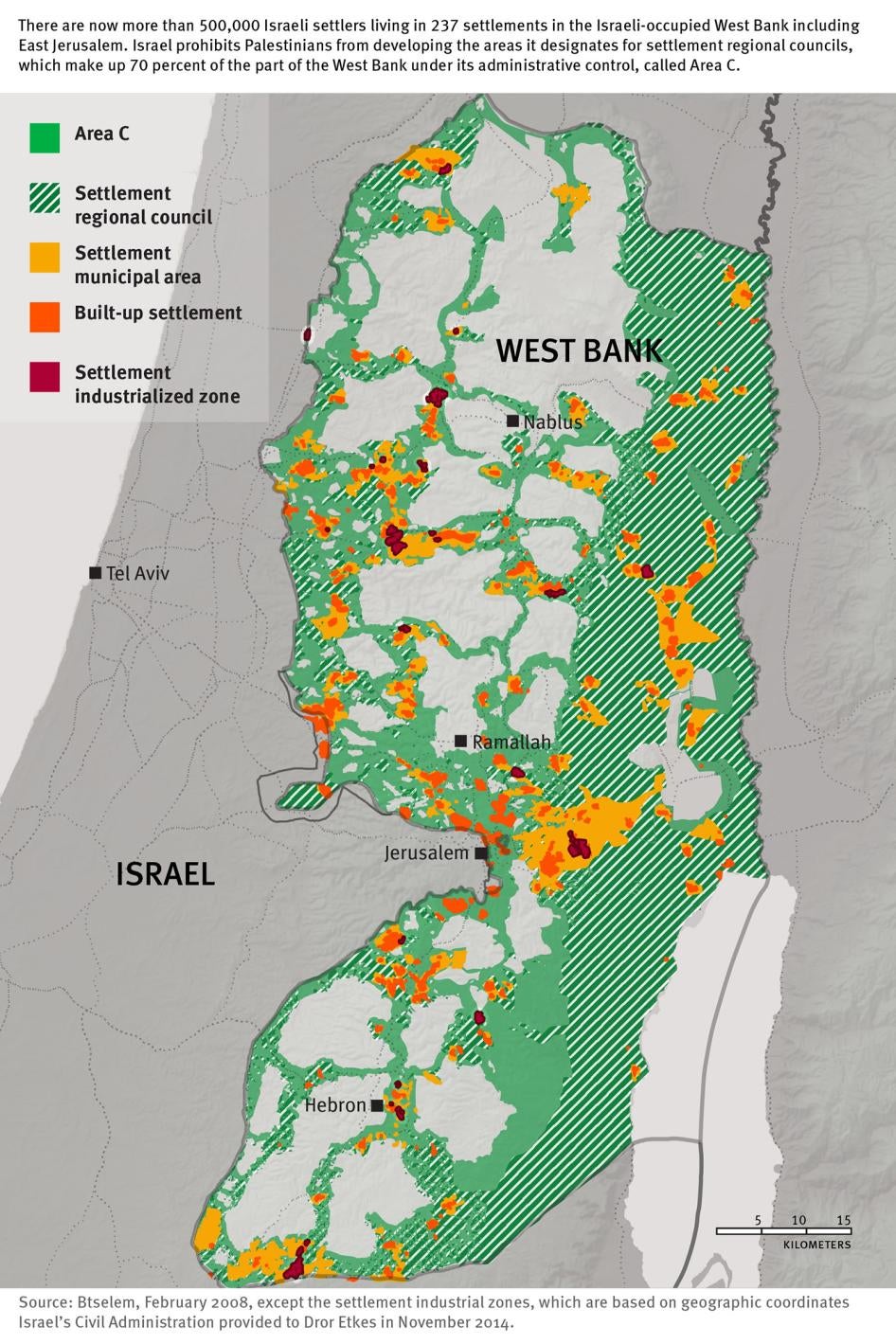
Reality is that there are today 634,000 Israeli citizens living in the Shomron and Judea and 356,000 living in Jerusalem over what was the Green Line . These numbers increase by on average 5.76% annually.

Opposition to the Oslo Accords & the Gaza "Disengagement"
In the 1990s, while leader of the Likud party in opposition, Benjamin Netanyahu was one of the most prominent critics of the series of agreements between Israel and the Palestine Liberation Organization (PLO) that became known as the Oslo Accords, which began under the Labor party government of Prime Minister Yitzhak Rabin. Following Rabin’s assassination in 1995 by a right-wing Jewish extremist, some Israelis, including members of Rabin’s family, even blamed Netanyahu for being complicit in Rabin’s murder by fanning the flames of incitement against him. In particular, his critics point to rallies that Netanyahu addressed at which Rabin was portrayed on signs in a Nazi uniform and accused of being a traitor.

Taking power in 1996 for his first term (1996-1999) shortly after Rabin’s death, Prime Minister Netanyahu proceeded to drag out the negotiations begun by the previous government while delaying or refusing to implement provisions of already-signed agreements, including redeployments of Israeli troops, antagonizing Palestinian negotiators as well as US President Bill Clinton. Following his first meeting with Netanyahu, in 1996, a frustrated Clinton exclaimed angrily to his aides: “Who the f--k does he think he is? Who's the f---ing superpower here?"

While drawing out talks with Palestinian negotiators, Netanyahu increased settlement construction, following the advice of his Likud predecessor, Yitzhak Shamir, who said after losing power in 1992 that if he had remained prime minister: “I would have conducted negotiations on autonomy for 10 years and in the meantime we would have reached half a million [settlers in the occupied West Bank].”

In 2001, back in the opposition, Netanyahu was caught on video bragging to a group of Jewish settlers that he had undermined the Oslo process while prime minister, stating: "I de facto put an end to the Oslo Accords.” Regarding pressure from the US, Netanyahu said: "America is a thing you can move very easily." In the video he also told the settlers that the way to deal with Palestinians is to "beat them up, not once but repeatedly, beat them up so it hurts so badly, until it's unbearable."

In 2005, then-Finance Minister Netanyahu resigned from his post in Prime Minister Ariel Sharon’s Likud government in protest of Sharon’s plan to withdraw settlers and soldiers from Gaza and four small Jewish settlements in the West Bank. Remaining on the fence until the last minute, Netanyahu resigned despite the fact that Sharon assured his right-wing critics that the withdrawal from Gaza would actually help prevent the creation of a Palestinian state rather than hasten it, by alleviating international pressure and allowing Israel to continue settlement expansion in the West Bank and East Jerusalem. As top Sharon advisor Dov Weisglass put it in 2004, the Gaza withdrawal supplied the “formaldehyde that is necessary so there will not be a political process with the Palestinians… until the Palestinians turn into Finns.”

The Bar-Ilan University Speech & Netanyahu's Vision of a Palestinian "State"
Returning to power in March 2009 for a second term as prime minister (2009-2013), Netanyahu once again came under pressure from a US president, recently elected Barack Obama, and the international community, to enter into serious negotiations with the Palestinians based on the two-state solution.

In June 2009, Netanyahu gave a speech at Israel’s Bar-Ilan University where he said for the first time that he supported the creation of a Palestinian state, in a move heralded by his supporters as a bold and historic moment. However, he attached numerous conditions that effectively stripped the proposed state of any real sovereignty, and others that no Palestinian leader could accept even if they wanted to. These conditions included:

The state would be demilitarized and its borders and airspace would be controlled by Israel.
Occupied East Jerusalem would remain under Israeli control.

Palestinians would have to recognize Israel as the “state of the Jewish people,” thereby formally endorsing the institutionalized discrimination that Palestinian citizens of Israel (who make up about 20% of the population) face living in a state that privileges Jews over non-Jews.

Palestinian refugees expelled during Israel’s creation and their descendants (also refugees) would not be allowed to exercise their internationally recognized legal right to return to the land they were forced to leave when Israel was established in 1948-9

In his speech to a joint session of the US Congress in May 2011, Netanyahu reiterated and elaborated on his vision of a Palestinian “state,” saying:
He would refuse to base negotiations on Israel’s internationally recognized, pre-1967 borders, the foundation of previous talks and international efforts to make peace going back decades.

Israel would retain large so-called settlement “blocs” in and around East Jerusalem, which jut into the West Bank (the heartland of the proposed Palestinian state), effectively cutting it in two.

Israel would maintain “a long-term military presence” in the Jordan Valley, meaning Israel would control all entry in and out of the Palestinian “state” along with some of its most fertile agricultural land.
In late December 2012, Likud Knesset member (MK) Tzipi Hotovely told a panel discussion that the Bar-Ilan address was merely a "tactical speech for the rest of the world," declaring: "We are opposed to a Palestinian state."

In July 2014, Netanyahu declared that he would never relinquish control of the Jordan Valley, the heartland of the West Bank portion of an envisaged Palestinian state, saying:
I think the Israeli people understand now what I always say: that there cannot be a situation, under any agreement, in which we relinquish security control of the territory west of the River Jordan.

In March 2015, while campaigning for reelection, Netanyahu declared that his Bar-Ilan University speech was no longer relevant and that he would never allow the creation of a Palestinian state as long as he was prime minister. Although he tried to walk back his statement rejecting a Palestinian state after winning reelection, a senior Israeli official subsequently went even further, telling a journalist that the creation of a Palestinian state “won’t even happen in our generation.”

Creating "Facts on the Ground"
During both his first (1996-1999) and second (2009-2013) terms in office, Netanyahu accelerated the building of Jewish settlements on occupied Palestinian land, part of an effort to create “facts on the ground” designed to prevent the creation of a contiguous and genuinely independent Palestinian state in the occupied West Bank and East Jerusalem.

In 1997, a year after taking power in his first term, Netanyahu gave the final go-ahead for construction of a new settlement between occupied East Jerusalem and Bethlehem in the occupied West Bank. Har Homa, which forms part of a ring of Jewish settlements around East Jerusalem, cutting it off from the rest of the West Bank, also forms part of a ring of more than 20 settlements on Palestinian land around Bethlehem, constricting that city’s growth. Attempting to minimize the diplomatic damage done by the announcement, Netanyahu claimed that Har Homa was insignificant and construction probably wouldn’t begin for years. Today, approximately 15,000 Jewish settlers live in Har Homa. In March 2015, while campaigning for reelection, Netanyahu admitted that Har Homa was located strategically in order restrict the growth of Bethlehem and its Palestinian population and to isolate it from nearby East Jerusalem.

From the time that Netanyahu returned to power for a second term in March 2009 until July 2012, the number of Jewish settlers living illegally on occupied Palestinian land in the West Bank grew by 18% according to the Israeli Interior Ministry. In November 2012, following a string of new settlement expansion announcements, including in the highly sensitive “E-1” corridor of East Jerusalem, the US State Department issued an unusually strong rebuke of Israeli settlement policies, with a spokesperson describing them as a "pattern of provocation."

On January 16, 2013, Israel's Peace Now, which monitors settlement growth, released a report condemning Netanyahu's settlement policies, alleging they "disclose a clear intention to use settlements to systematically undermine and render impossible a realistic, viable two-state solution to the Israeli-Palestinian conflict."

Likud & Coalition Partner Opposition to Palestinian Statehood (During Netanyahu's Third Term)

Likud
Inspired by the Revisionist Zionism of Zeev Jabotinsky, who advocated the creation of a Greater Israel that included all of historic Palestine as well as Jordan, Netanyahu’s Likud party has historically opposed Palestinian statehood in the occupied territories and is strongly supportive of Israel’s settlement enterprise. In previous years, Likud's platform explicitly prohibited the creation of a Palestinian state “west of the Jordan River.” During the most recent election, the combined Likud-Yisrael Beiteinu party electoral list released no platform, with some observers speculating that it was because neither party supports the two-state solution but didn’t want the diplomatic headaches that would be created if they declared it in their electoral platform.

Despite Netanyahu’s supposed acceptance of Palestinian statehood as detailed in his Bar-Ilan speech, his party and its rank and file members have never accepted the idea of an independent Palestinian state in the occupied territories. Key Likud members named to Netanyahu’s new cabinet who oppose Palestinian statehood include Defense Minister Moshe Ya’alon, Deputy Defense Minister Danny Danon, and Deputy Foreign Minister Zeev Elkin. During the previous government Ya’alon criticized his predecessor, Ehud Barak, for not approving settlement construction quickly enough, while Danon and Elkin, a settler considered one of the most right-wing members of Israel’s previous parliament, want to annex "Area C" of the occupied Palestinian West Bank (about 60% of the total area) which, according to the terms of the interim Oslo Accords falls under full Israeli security control. 
Image result for See here for a UN map of Area C

Yisrael Beiteinu & HaBayit HaYehud
In October 2012, Netanyahu allied Likud with former Foreign Minister Avigdor Lieberman’s ultranationalist Yisrael Beiteinu (Israel Our Home) party to run on a joint parliamentary ticket in the upcoming election. Yisrael Beiteinu and Lieberman were important players in Netanyahu’s previous government and will be again for his third term. Lieberman, a settler, has a long history of opposing peace negotiations and agreements signed with the Palestinians, and has said on numerous occasions that peace isn’t possible for at least a generation.

Naftali Bennett’s ultra right-wing, pro-settler HaBayit HaYehudi (Jewish Home) party is another key member of Netanyahu’s new government. While not a settler himself, Bennett is a former head of the main political body that represents Jewish settlers living in the occupied Palestinian territories and also supports annexing the 60% of the Palestinian West Bank known as Area C. In January 2013, Bennett told an interviewer: "I will do everything in my power, forever, to fight against a Palestinian state being founded in the Land of Israel." As part of the coalition agreement signed between the governing parties, HaBayit HaYehudi added a provision requiring the government hold a national referendum on any peace agreement that involved returning occupied Palestinian land. (

What Others Think of Netanyahu
In January 2013, columnist Jeffrey Goldberg of Bloomberg news reported that US President Barack Obama was fed up with Netanyahu and his partners in the previous coalition government, and that he believed "Israel doesn't know what its own best interests are."
In October 2012, former US President Jimmy Carter, who brokered the Camp David peace treaty between Israel and Egypt, accused Netanyahu of having “abandoned” the two-state solution by refusing to halt settlement construction.

In April 2012, Yuval Diskin, the former head of Israel's internal security agency, the Shin Bet, blamed Netanyahu for the impasse in the peace talks with the Palestinians, stating:
Forget the stories they tell you about how [PLO Chairman Mahmoud] Abbas is not interested in negotiation… We are not talking to the Palestinians because this government has no interest in negotiations. “I was there up to a year ago and I know from up-close what is happening. This government is not interested in solving anything with the Palestinians, and I say this [with] certainty.

In May 2012, a leaked report revealed that officials in the British Foreign Office also blamed Netanyahu for the lack of negotiations. The report stated: "Netanyahu has a history of using the incitement issue as a delaying tactic in peace talks." Regarding Israeli claims the Palestinian Authority (PA) school system incites hatred and violence, the Foreign Office report added: "Authoritative studies agree that PA textbooks are not inciting hatred of Israel."

In November 2011, former French President Nicholas Sarkozy was caught on a microphone complaining to President Obama that Netanyahu was a "liar," stating: "I cannot stand him. He's a liar." Seeming to agree, Obama replied, "You're fed up with him? I have to deal with him every day."

In September 2011, former US President Bill Clinton blamed Netanyahu for the failure of peace talks, adding, "The real cynics believe that the Netanyahu government's continued call for negotiations over borders and such means that he's just not going to give up the West Bank."
I
n February 2011, a senior German official told Haaretz newspaper that Chancellor Angela Merkel, a strong supporter of Israel, had expressed her frustration with Netanyahu during a phone conversation, complaining, "You haven't made a single step to advance peace."

In March 2010, Secretary of State Hillary Clinton harshly criticized Netanyahu in a phone call after the Israeli government announced the construction of 1600 new settlement units in occupied East Jerusalem during a visit by Vice President Joe Biden. According to a State Department spokesman, during an angry 45-minute conversation Clinton told Netanyahu that the announcement sent a “deeply negative signal about Israel's approach to the bilateral relationship and [was] counter to the spirit of the vice president's trip… this action had undermined trust and confidence in the peace process and in America's interests." The same day, Clinton told CNN: "The announcement of the settlements on the very day that the vice president was there was insulting.”

Influences on Netanyahu's Views Towards the Palestinians
Netanyahu’s views on the Palestinians were heavily influenced by Zeev Jabotinsky, the founder of the Revisionist Zionism movement and ideological father of Netanyahu’s Likud party. Jabotinsky, who died in 1940, advocated the creation of a “Greater Israel” that encompassed not only what is today Israel, but the occupied Palestinian territories and neighboring Jordan.


Netanyahu was also deeply influenced by his father, Benzion, with whom he was close until the latter’s death in April 2012. The elder Netanyahu (who was born Benzion Mileikowsky before emigrating to Palestine from Warsaw, Poland, in 1920 and changing his name to Netanyahu) worked for a time as a secretary to Jabotinsky in the late 1930s and held uncompromisingly harsh, racist opinions of Arabs. In a lengthy 2009 interview in which he described in detail his views towards Palestinians and other Arabs, Benzion Netanyahu told the Israeli newspaper Maariv:
The Bible finds no worse image than that of the man from the desert. And why? Because he has no respect for any law. Because in the desert he can do as he pleases. The tendency toward conflict is in the essence of the Arab. He is an enemy by essence. His personality won’t allow him any compromise or agreement. It doesn’t matter what kind of resistance he will meet, what price he will pay. His existence is one of perpetual war.
The two-state solution doesn’t exist. There are no two peoples here. There is a Jewish people and an Arab population… There is no Palestinian people, so you don’t create a state for an imaginary nation… They only call themselves a people in order to fight the Jews.When asked what he thought the solution to the conflict was, the elder Netanyahu replied: “No solution but force… strong military rule. Any outbreak will bring upon the Arabs enormous suffering. We shouldn’t wait for a big uprising to start, but rather act immediately with great force to prevent them from carrying on.”
Asked how his views had influenced his son’s policies as prime minister, in the same 2009 interview the elder Netanyahu stated:
Bibi might aim for the same goals as mine, but he keeps to himself the ways to achieve them, because if he gave expression to them, he would expose his goals.

Because he is smart. Because he is very careful. Because he has his ways of handling himself. I am talking about tactics regarding the revealing of theories that people with a different ideology might not accept. That’s why he doesn’t expose them - because of the reaction from his enemies as well as from the people whose support he seeks. It’s an assumption, but it might be correct.

In a televised interview with Netanyahu and his father after the Bar-Ilan speech in 2009, the elder Netanyahu said of the caveats that his son (who was sitting next to him) had placed on Palestinian statehood:
He supports the kind of conditions they would never in the world accept… That’s what I heard from him. Not from me. He put forth the conditions. These conditions, they will never accept them — not even one of them.

Thursday, March 9, 2017

#OyVeyDonaldTrump Promises on Zion, Israel and Antisemitism ..... nothing but hot air and extreme disapointment so far.

Image result for Cartoon Trump promises on israel and anti semitism hot air balloon
Trump disappoints on US antisemitism and Israel

President Trump's reaction to growing US antisemitism has been tepid, while on Israel the administration is beginning to sound like previous governments in Washington.

Prime Minister Benjamin Netanyahu has just returned from a highly successful trip to Singapore and Australia and is on his way to Moscow to consult with Russian president Vladimir Putin about mutual interests. Under his guidance Israel has strengthened relations with Asia/Pacific, Africa and Latin America and is outflanking the Israel-phobic countries of continental Europe by also improving relations with the UK. Sub-rosa collaboration with Egypt, Saudi Arabia and the Gulf states continues to burgeon.

So far so very good. Economic activity is booming and Israel's financial situation has never been stronger. Export of natural gas is set to begin and that bonanza is likely to continue to grow for the foreseeable future, now that exploitation of the Leviathan field has been announced. The strength of the shekel in the face of central bank sales may be creating problems for Israeli exporters but it is a faithful indication of the market's view of Israeli prospects

But a dark cloud is beginning to form on Israel's western flank. For a long time it looked as if the US, still the most important foreign relationship Israel has, would avoid the new wave of antisemitism afflicting Europe. But no longer. Anti-semitic activity has begun and has grown rapidly, with the spread of the BDS movement in universities and professional associations, threats to Jewish centers in many cities and desecration of Jewish cemeteries.

The reaction of the Trump administration, which was supposed to initiate a new era of Israeli-US relations, has been remarkably tepid, with the exception of Vice President Mike Pence. Even more disappointing has been the feeble response of most of the American Jewish organizations, with a few exceptions, such as the ADL. Thus a dilemma is being created for the government in Jerusalem (which according to the new secretary of defense is not located in the capital of Israel, which is Tel Aviv). Initial euphoria about the Trump administration is beginning to appear greatly exaggerated.

The American embassy is obviously not about to be moved to Jerusalem and warnings about building in the West Bank are becoming harsher and beginning to sound like previous governments in Washington.

Support for Israel in Congress has not weakened, at least so far, but that is the end of the good news. Action needs to be taken, quickly and strongly, by the Israeli government to encourage and collaborate with pro-Israeli forces in the US, including evangelical Christian groups, to ensure that antisemitic activities are denounced in the strongest terms and counter-actions undertaken. Support in state and municipal governments needs to be mobilized. Finally, the large group of American Jews who are indifferent to Israel need to understand that their love-affair with the "progressive" elements of the American left is encouraging and validating all kinds of dangerous activities which will boomerang against them sooner rather than later.

There is no room for complacency. The time for decisive action is now, before the ripples of antisemitism in the US become a tidal wave.

Words All Jewish Kids Grew Up Hearing The Jewish vernacular.


1. Verklempt

Definition: when you have no words because you are filled with much emotion
Sentence: Your grandma was verklempt after seeing you in your bar/bat mitzvah attire.

2. Schpilkes

Definition: when one is overwhelmed and/or nervous 
Sentence: She has schpilkes before going up to read the torah in front of the congregation.

3. Oy Gevalt

Definition: the act of being stunned by something you hear
Sentence: "OY GEVALT" she cried out once she heard how much the party would cost.

4. Shmutz

Definition: dirt or stain on ones face, body or clothing 
Sentence: She wiped the piece of shmutz off her daughter with a wet paper towel.


5. Fakakta

Definition: something silly or ridiculous 
Sentence: Grandma Rosalie didn't like the fakakta rap music that was playing at the wedding.

6. Shana Punum

Definition:  endearing term, from grandma to grandkids
Sentence: "Bubbala, can you fetch me my reading glasses" yelled grandma Judy.

7. Shana Punum

Definition: beautiful face
Sentence: Aunt Shirley pinched her cheeks and exclaimed "What a Shana Punum!!"

8. Mishpucha

Definition: you are extended family
Sentence: Matthew was basically mishpucha for he went to all of his best friends family events.

9. Shiksa

Definition: non-Jewish girl
Sentence: His mother almost fainted when she heard her son was dating a shiksa.

10. Plotz

Definition: to freak out with excitement 
Sentence: I could plotz from the beautiful view of the mountains.


11. Schtick

Definition: a persons actions or act
Sentence: The magician’s schtick was sawing a women in half.

12. Spiel

Definition: a long and detailed story, speech, or plot
Sentence: He asked her for the whole spiel on the fight between uncle Marvin and grandpa Murray.

13. Tchatchke

Definition: a toy or an item 
Sentence: Stacey has so many tchatchkes in the house there is hardly room for the family.

14. Tuches

Definition: ones rear end
Sentence: "Don't you talk back to me young lady, I wiped your tuches" her mother yelled.

15. Nosh

Definition: a snack before, after or with a meal or when  grandma wants to stuff food in your face
Sentence: “What can we nosh on today? How about some cookies!” said grandma Rita.


16. Chutzpah

Definition: courage and/or bravery 
Sentence: Stewart had a lot of chutzpah for standing up to his older brother Kevin.

17. Kvetshed

Definition: to complain or whine about something
Sentence: Trevor kvetshed because he didn’t want to go to temple.

18. Shlep

Definition: to drag someone unwillingly along 
Sentence: Jodi was tired of shleping her son on his earns.

19. Mench

Definition: a hero or a person who does good deeds
Sentence: Andrew was a mench for helping the old women cross the street.

20. Mazel Tov

Definition: good luck
Sentence: She wished her nephew and his wife Mazel Tov on the birth of their first child.