
The Institute for National Security Studies (INSS) recently held its annual conference, which was attended by statesmen, military commanders, media figures, and political and security experts from Israel and abroad. As true of any conference of this type, many divergent opinions were expressed on a range of topics. They sketched a complex picture of Israel’s current situation and the challenges it can expect to face in 2017. Based on the mosaic of opinions presented at the conference, several distinct, unambiguous trends characterizing this moment in time did emerge from the event.
Strategic Balance
Israel’s overall strategic balance is positive. Israel is viewed as a regional power with undeniable military superiority over its rivals and enemies. Its regional situation is stable, mostly due to the weakening of its rivals by many years of internal wars in the Arab world. The ongoing bloodbaths in Syria, Iraq, Libya, and Yemen are not expected to end any time soon. The power struggle for regional hegemony between Iran, Turkey, and the Sunni states led by Saudi Arabia is a destabilizing factor and leaves little hope for sustainable mitigation of the region’s religious, ethnic, and national enmity. Nonetheless, in the internal and international arenas, Israel’s situation is deteriorating, a fact upon which we focus below.
Ramifications of Donald Trump’s Presidency
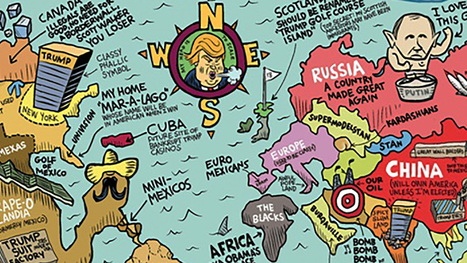
Trump’s presidency was the major change affecting the conference, coloring virtually every discussion, including those debating the risks, but even more so when “Trumpportunities” were identified, especially from the perspective of Russia and right-wing parties in Israel.
The dramatic shifts in the West, primarily Trump’s election to the US presidency and the United Kingdom’s decision—based on a popular referendum—to withdraw from the European Union (Brexit), have shaken up the international community’s agenda. These shifts are a direct consequence of deep subterranean processes that have taken place over the last decade. They reflect an isolationist desire on the part of western societies and are manifested by the rise of the nationalistic right at an unprecedented scope since the end of World War II. According to Professor Shlomo Avineri, there are four main reasons for this: the exclusion of large segments of the population from the political elite; the great economic crisis of 2008; the influence of social media; and the after-effects of large-scale waves of immigration. These have created a social class that feels endangered and therefore rejects the existing liberal democratic order. The isolationist, anti-globalization tendency opened a door to forces competing with the West in the international system. The first is Russia, whose military intervention in Ukraine and later in Syria has restored some of the international prestige it had lost when the Cold War ended. The other is China, which is extending its influence over vast regions—including the Middle East and Africa—through its economic policy.
The new Trump administration provides Israel with an opportunity to ensure the stability and strength of its strategic relations with the United States, its most important and loyal ally, as well as continued American support for Israel in every field, especially security. When the presidential election results were announced, the cheers in Jerusalem indicated hope for the start of a new era. But it is imperative that Israel’s leadership does not rush to identify with everything that Trump represents. Trump’s worldview, as presented during the election campaign, encompasses some highly problematic aspects in terms of universal values that Israel must not identify with or adopt, because doing so might come back to haunt Israel in the future. The more that Israel identifies with Trump’s policies, the more it is liable to become the weakest link, targeted by members of the international community who are opposed to Trump and his directives. Furthermore, a blatant cold shoulder to the American Jewish community, the majority who supports the Democratic Party, is short-sighted and can harm Israel in the long-run. Israel must return to being a bipartisan issue, receiving support from both sides of the political aisle.
The Need to Focus on Healing the Rifts
Given the diminishing external threats, Israel’s internal challenges now dominate the public agenda, with the relations between the military and society being a prominent issue. This is not a new phenomenon, however; since its inception, the IDF—being “the people’s army”—and its relations with the people have always been part of the public discourse. But it seems as if in the past year, the tune has changed. In addition to incidents that highlighted the relationship between religion and the military, the most impactful, talked-about event was Elor Azaria’s shooting of the disarmed terrorist in Hebron. The fundamental issue was the hotly debated question of the IDF’s morality and its fighting norms, but the incident also exposed essential differences of opinion on the army’s conduct, the representative institutions of democracy, and the public’s trust in the system. The irresponsible conduct of some officials, motivated by political considerations, severely damaged the status of the state’s judiciary and the public’s trust in the IDF. In this case, the public was subjected to manipulation of the meaning and the boundaries of “security,” which is open to many interpretations, but was used here for political ends that undermine the democratic foundations of the state.
Another issue in the internal arena is the position of the Arab public within the state. Politicians, both Arab and Jewish, have deepened the Jewish-Arab rift and have harmed the relations formed since the creation of the state. Civil society representatives from the Arab sector have asked to end the practice of testing their loyalty; they wholeheartedly identify as Israeli citizens and ask for equality of rights and opportunities. President Reuven (Ruvi) Rivlin’s statement at the conference that the government should make regularizing construction in Israel’s Bedouin settlements and Arab cities its top priority resonated especially with this issue.
The Time to Present a Plan on the Palestinian-Israeli Conflict
As was made clear by all the speakers, as well as by a comprehensive survey the INSS carried out in preparation for the conference, the Israeli-Palestinian conflict lies at the core of Israel’s challenges at every level. The political stalemate and occasional outbursts of violence since October 2015 have led to despair on both sides, and neither has a plan of action that inspires hope for relations between the two peoples in the future. Trump’s inauguration was encouraging because of statements he made both before and after moving into the White House. His unconditional support for Israel creates a new situation in which there is no longer any “bad cop” in Washington who will curb Israeli policy. In such a state of affairs, Israel has a golden opportunity to stop being ambiguous and present a clear policy on the conflict, but there is also a risk that Israel might take rash and irreversible steps.
Israeli politicians have firmly grasped this realization and have tried to propose ideas to improve Israel’s situation. Education Minister Naftali Bennett presented his vision of annexing Areas C and instituting Palestinian autonomy in Areas A and B. His colleague, Justice Minister Ayelet Shaked, complemented the proposal by presenting practical steps: moving the embassies of the United States and other nations to Jerusalem, annexing Ma’aleh Adumim and the Etzion Bloc, and undertaking massive construction in the West Bank. Neither was a plan; rather they were merely ideas, because no references were made or considerations given to the many security, political, and moral ramifications of closing off the option of reaching arrangements with the Palestinians as well as its effect on Israel’s international standing. From the other side of the Israeli political map, Yitzhak Herzog and Tzipi Livni, the leaders of the Zionist Camp, presented their vision of two states for two peoples. Herzog listed the steps needed: separating from the Palestinians; instituting a ten-year agreement of non-violence in the area between the Mediterranean and the Jordan River during which a dialogue between the two peoples would be launched to create trust and to develop a foundation for cooperation; accelerating Palestinian economic development; and ending support for terrorism and incitement in the Palestinian Authority. At the end of the ten-year period, it would be possible to discuss a permanent status agreement. This vision, too, is only partial, and is not cohesive enough to serve as a practicable plan of action.
A component shared by all the proposals was the need to improve the Palestinian economy. It seems that there is wide agreement on its importance in stabilizing Israeli-Palestinian relations. This is especially true for the Gaza Strip, which requires serious humanitarian assistance and infrastructural improvement. An interesting component is the plan to build a seaport on an artificial offshore island, as proposed by Transportation and Intelligence Minister Israel Katz. Even greater consensus exists about the opportunity for cooperation with the so-called pragmatic Sunni Arab states. The call to expand cooperation with them already has become commonplace, even trite, and is based on a combination of two basic assumptions: first, the Israeli-Palestinian conflict, which in the past topped the agenda of many states, has become less important than it was previously and no longer hinders official relations; and second, Israel and the Arab states have many shared interests, from stopping Iran’s influence in the Middle East and defeating ISIS, to issues relating to the economy, infrastructure, and resources. Minister Katz even presented the plan “Trains to the East” as a commercial transportation platform to promote such an agenda. There is nothing wrong with trying to forge closer relations with the Arab states, and Israel’s security relations with Egypt and Jordan have only strengthened the recognition of the positive potential of peace treaties. But Israel’s assumption that there is readiness for establishing open official relations in the absence of progress on the Palestinian political process is not factually grounded and ignores public opinion in the Arab states where the mention of Israel is still a red flag.
In the broader sense, Israel is now experiencing an international intifada, as US General (ret.) David Petraeus put it. A wide range of players are operating against Israel, with only a minority that is anti-Semitic and denies the legitimacy of Israel’s very existence (especially under the banner of the BDS movement), with the majority whose opposition is motivated by Israel’s policy on the Palestinians. UN Security Council Resolution 2334 of December 2016 is an illustrative example. In the eyes of the world, the policy on construction in the West Bank Jewish settlements is a test of Israel’s real intentions: does it want a political resolution based on the two-state solution or not? At the end of the day, Israel’s unwillingness to end its rule over another people in the West Bank and its steps jettisoning the two-state solution, for all intents and purposes, are liable to result in Israel’s political isolation and in danger of being subjected to boycotts and sanctions. The establishment and operation of systems to fight delegitimization can help Israel’s standing here and there, but cannot make a substantial difference. Being willing to make progress in measures that aim for arrangements with the Palestinians, including real steps on the ground, is the best thing Israel can do for itself.
The Question of the Validity of the Non-Intervention Strategy in Syria
Since the beginning of the civil war and the direct involvement of proxies and foreign powers in Syria, Israel has opted for a strategy of non-intervention, unless there is an imminent threat to Israel. Russia’s military intervention, which has become a key factor in shaping Syria’s future, and the growing strength of the pro-Assad coalition—led by Russia and joined by Iran, Hezbollah, and thousands of other Shiite militia fighters—have gained momentum since the victory in Aleppo, with the scales tilted in favor of Assad in the overall balance of power. Eventually, the battles will spread to southern Syria and the Syrian Golan Heights, which is liable to affect Israel directly and increase the chances of escalation vis-à-vis Iran and its proxies—especially Hezbollah—including the Lebanese arena. This analysis indicates that in preparation for such an eventuality, Israel must work more closely with Jordan to establish a joint area of influence in southern Syria and to continue shaping a reality convenient for Israel along the Syrian border by providing civilian and humanitarian assistance to the local communities on the condition that they prevent terrorist activity from their territory.
In Syria, too, much depends on Trump’s policy. Based on what we currently know, it seems he will prefer to focus on defeating ISIS, as his predecessor did, and leave the overall solution to Russia. The shift in the balance between the two major international powers in the Middle East and in general was evident at the Astana Conference, which was led by the Russians and was the first time since World War II that the United States was not a central player in an international process to determine a new world order.
From Israel’s point of view, this is very worrisome, which is why Israel must take prompt, intensive action with the United States to ensure that in any future arrangement in Syria, Iran will not be part of the solution, and neither Iran nor Hezbollah will be allowed a presence in Syria in general and in the Golan Heights in particular. The Israeli effort vis-à-vis Iran must be part of the overall policy on the Iranian regional subversion and its ambition to achieve nuclear capabilities. President Trump has declared his desire to reconsider the July 2015 nuclear deal signed with Iran, although it is hard to tell how serious he is. It is unlikely that a unilateral revocation would serve the best interests of the United States and its allies, including Israel. Either way, Israel must build a joint plan with the United States to combat Iran on two levels. The first and more immediate one is preventing Iranian expansion and subversion in the Middle East. The second is intelligence and operational preparation for the time when the limitations of the nuclear agreement will end and Iran will be free to acquire military nuclear capabilities.
Formulating a Security Doctrine to Meet Current and Future Challenges
Israel must formulate a doctrine to confront the range of challenges presented at the conference, and it must articulate its political and security goals for the future. Based on the topics discussed, several positive points can be discerned about Israel’s strength and military superiority. The IDF’s air force has taken a significant qualitative leap by acquiring the Adir planes (F-35) while also developing advanced capabilities in the field of unmanned aerial vehicles and multi-layer aerial defense systems. An Israeli cyber system was constructed, and is at the forefront of Israeli innovation. The field of cyber demonstrates how it is possible to take a vision and an existing civilian infrastructure and turn them into a powerful tool (of both soft and hard power) to serve the country’s national security. Furthermore, the IDF’s current multiyear plan, the Gideon plan, demonstrates that the IDF is adjusting to a changing world and can adapt both to external processes and internal processes within Israeli society. On the other hand, like the IDF strategy document of August 2015, it also highlights the fact that military plans are not enough and that the absence of a political vision and goals is sorely felt. Currently, the security establishment is operating without a long-term strategic or political direction, and must engage in planning processes based on its own definitions so that the military echelon will be well prepared for the challenges of the future.
It’s Time to Make Decisions
As 2017 gets under way, Israel is facing more questions than answers. Some are rooted in the uncertainty relating to the new US administration and the implications of that change for Israel’s strategic environment, but many are linked to the Israeli penchant for avoiding decisions that it must make for itself. In the internal arena, the rifts among the various social segments must be healed, and the status of the IDF and the court system must be restored in the name of democracy and ethical principles. In the regional arena, it is possible and desirable to continue to promote cooperation with actors with whom Israel can work, based on overlapping interests—including local forces and influential groups that are not necessarily states—in a graduated, bottom-up manner. In the international arena, it is important to rebuild Israel’s status by relying not only on the Trump administration, but also by accentuating Israel’s added value to the free world when it comes to shared values, the economy, and scientific and technological innovation. Above all, Israel must act decisively to preserve the options for advancing arrangements with the Palestinians, based on separation, with an aim for ending the rule over the Palestinian people in a way that will ensure Israel’s continued existence as a Jewish, democratic, ethical, and secure state, for the good of both peoples.

